
How does loan work in football?
Football operates differently from most other sports, particularly when it comes to the transfer market. Among its many mechanisms, the loan system stands out as a highly effective tool that clubs rely on for multiple purposes. It allows teams to develop emerging talents, manage squad depth, and maintain financial balance within increasingly strict regulations.
In many cases, a loan move offers young players the chance to gain valuable first-team experience, while larger clubs can navigate frameworks such as Financial Fair Play with greater flexibility. At the same time, it remains one of the most adaptable solutions available in the modern game.
So, how does loan work in football? Nowgoalmobi.net takes a closer look in this article.
How does loan work in football?
Under FIFA regulations, specifically the Regulations on the Status and Transfer of Players, a loan is defined as a temporary transfer of a player’s registration. While the footballer continues to belong to the parent club, his services are made available to another side for an agreed period.
In practice, loans are driven by clear strategic objectives. First, player development remains central, with young prospects often sent to less demanding leagues to gain regular minutes and adapt physically to senior football. At the same time, financial considerations play a major role. Parent clubs can ease wage pressure, while borrowing clubs gain access to talent that would otherwise be beyond their budget.
The process itself involves a three-way agreement between the parent club, the receiving club, and the player. Typically, the loan club pays a fee for the deal and agrees to cover all or part of the player’s salary. Contracts may also include key provisions such as a recall clause, allowing the parent club to terminate the loan early, particularly during the January window if squad depth becomes an issue.
Top 5 most successful loan transfers
5. Romelu Lukaku (Chelsea to West Bromwich Albion, 2012-2013)
One of the most notable examples of a successful developmental loan in the Premier League is the early career of Romelu Lukaku. Signed by Chelsea from Anderlecht in 2011 for around £17 million, he arrived with expectations of becoming the long-term successor to Didier Drogba. However, his first season at Stamford Bridge offered limited opportunities and little momentum.
As a result, Chelsea opted to send the young striker on loan to West Bromwich Albion. There, Lukaku flourished, scoring 17 league goals and finishing among the division’s top scorers, even outperforming every Chelsea player that season. His campaign included a memorable hat-trick in the final match of Sir Alex Ferguson’s managerial career.
Although he returned to Chelsea the following season under José Mourinho, another loan move soon followed, this time to Everton.

4. Martin Ødegaard (Real Madrid to Arsenal, 2021)
The case of Martin Ødegaard illustrates how the right environment can accelerate a player’s rise from promising talent to central figure. By early 2021, his situation at Real Madrid had become increasingly complicated. Despite an impressive spell with Real Sociedad, opportunities remained limited due to the established midfield trio of Casemiro, Toni Kroos and Luka Modrić.
A loan move to Arsenal in the winter window proved decisive. Under Mikel Arteta, Ødegaard quickly became the creative hub the side had been lacking, linking play and dictating tempo. His impact extended beyond numbers, convincing Arsenal to secure him on a permanent deal. Within a year, he was appointed club captain at just 23 and has since remained a key figure as Arsenal push towards a Premier League title.
3. Fernando Morientes (Real Madrid to Monaco, 2003-04)
Often referenced as a cautionary tale for parent clubs, the loan spell of Fernando Morientes remains a defining example of a player proving his worth after being deemed surplus. A three-time Champions League winner with Real Madrid, he found himself pushed aside following the arrival of Ronaldo Nazário in 2002. He was subsequently loaned to AS Monaco, then managed by Didier Deschamps.
What followed was remarkable. In the Champions League quarter-finals, Monaco were drawn against Real Madrid, and Morientes scored in both legs to help eliminate his parent club, who were still covering part of his wages. Although Monaco eventually lost to FC Porto, led by José Mourinho, Morientes finished the campaign as the competition’s top scorer with nine goals.
2. Thibaut Courtois (Chelsea to Atletico Madrid, 2011-2014)
The loan spell of Thibaut Courtois is often regarded as one of the most remarkable long-term arrangements in modern football. Unlike typical short-term deals, Chelsea allowed him to spend three full seasons at Atlético Madrid, effectively shaping his development away from Stamford Bridge.
At the time, breaking into the first team was unrealistic with Petr Čech firmly established as number one. As a result, Courtois was sent to Madrid to fill the void left by David de Gea. During that period, he did not make a single appearance for Chelsea, yet became a key figure for Atlético, recording 154 matches and 76 clean sheets. He also played a major role in their La Liga triumph in 2013/14 and run to the Champions League final.
Courtois has since gone on to establish himself as one of the world’s leading goalkeepers with Real Madrid.
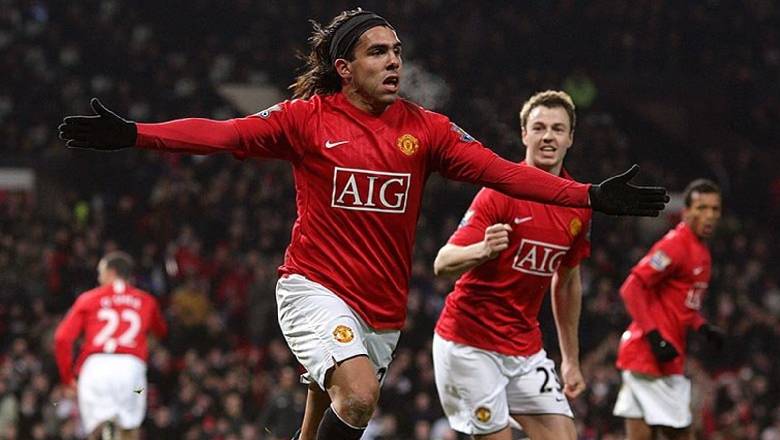
1. Carlos Tevez (West Ham to Manchester United, 2007-2009)
The loan spell of Carlos Tevez at Manchester United marked a turning point in his career, elevating him from a cult figure to a global name. Having just secured West Ham United’s Premier League survival with a decisive goal at Old Trafford, he quickly caught the attention of Sir Alex Ferguson. The United manager saw him as an ideal fit alongside Wayne Rooney and Cristiano Ronaldo, offering energy and tactical flexibility in attack.
Across two seasons, Tevez made 99 appearances, scoring 34 goals and providing 14 assists, while playing a key role in two Premier League titles and a Champions League triumph. However, despite strong support from fans, uncertainty over a permanent deal left him feeling undervalued. He eventually made a controversial switch to Manchester City, although his time at United remains a benchmark for the impact of a short-term move.
Top 5 most successful loan transfers
5. Romelu Lukaku (Chelsea to West Bromwich Albion, 2012-2013)
4. Fernando Morientes (Real Madrid to Monaco, 2003-04)
3. Martin Ødegaard (Real Madrid to Arsenal, 2021)
2. Thibaut Courtois (Chelsea to Atletico Madrid, 2011-2014)
1. Carlos Tevez (West Ham to Manchester United, 2007-2009)
Nowgoalmobi has answered the question: “How does loan work in football?”, along with ranking the top 5 most successful loan transfers.
Visit our site to explore the latest football results, breaking news, and in-depth predictions from our experts.
The Most Popular
-
 When does the English Premier League start? Top 5 most decorated clubs of the league
 -
 Belgium football kit history: Ranking the greatest kits ever
 -
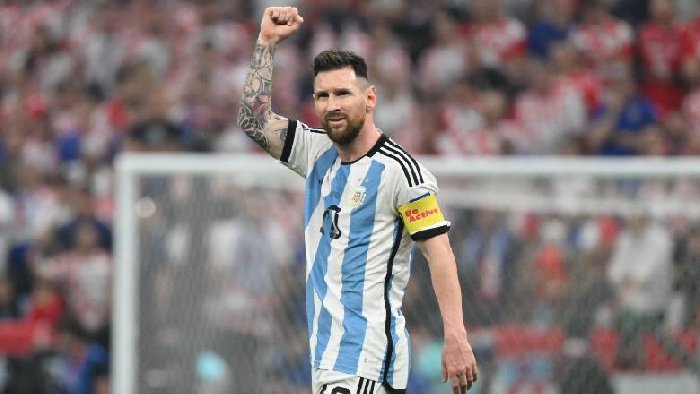 Who is the captain of the Argentina football team in 2022? The year Argentina conquered the world
 -
 Top 5 players fastest to 100 Premier League goals: Erling Haaland etches his name into history
 -
 How are FIFA player ratings calculated? Breaking down the secret behind the numbers on the card
 -
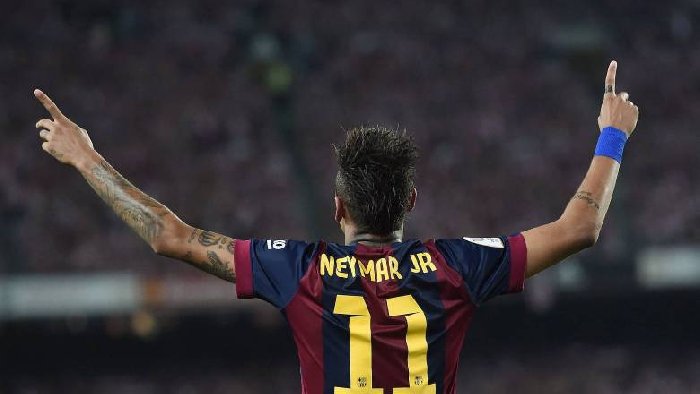 All Neymar’s jersey numbers: Featuring both 7 and 10
 -
 Japan national football team players at World Cup 2026: 11 stars who can take the Blue Samurai deep
 -
 Why did Edinson Cavani leave PSG? Uncovering the real story behind the Uruguayan striker’s exit
 -
 How much did Bayern pay for Mane? Top 5 Bayern Munich’s record signings
 -
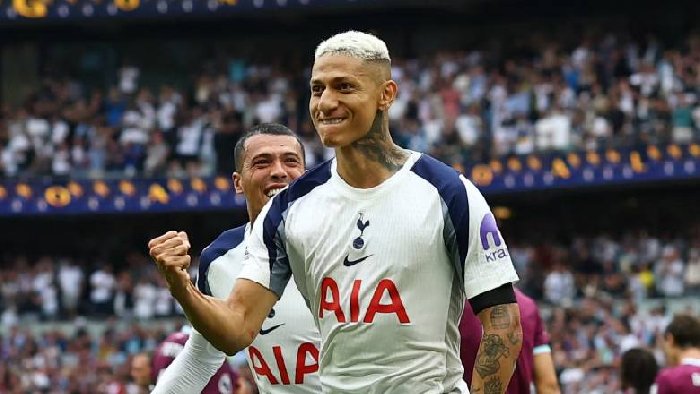 How much did Tottenham pay for Richarlison? Top record signings of Tottenham