
The highest goal scorer in World Cup: A record defined by a German striker
The FIFA World Cup represents the pinnacle of international football, a tournament where reputations are forged and history is written. Few achievements carry more weight on this stage than scoring goals, a measure often used to define greatness at the global level.
With the next edition fast approaching, the United States, Canada and Mexico are preparing to host the largest World Cup in history in 2026. Against that backdrop, Nowgoalmobi takes a closer look at the highest goal scorer in World Cup history and presents the top 10 players who have left the strongest mark in front of goal on football’s grandest stage.
The highest goal scorer in World Cup: A crowning achievement for a German
German striker Miroslav Klose remains the highest goal scorer in FIFA World Cup history with 16 goals, a record that underlines both his longevity and consistency on football’s biggest stage.
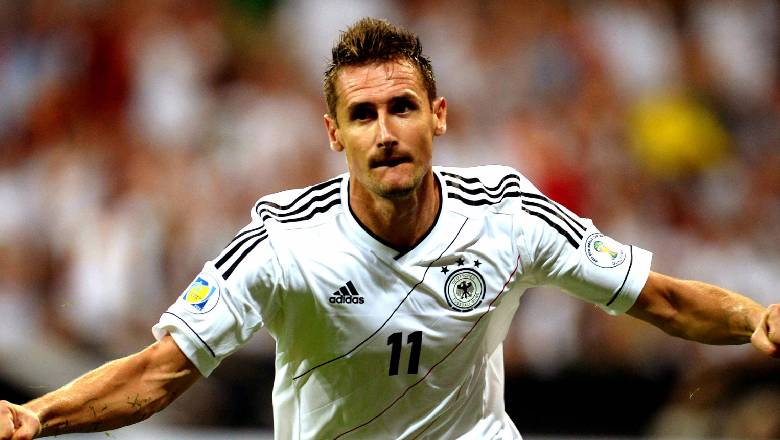
He announced himself at the 2002 World Cup with a hat trick against Saudi Arabia, accounting for all of his goals at that tournament. Four years later on home soil, Klose claimed the Golden Boot with five goals and guided Germany to the semi-finals, where they were eventually eliminated by Italy.
Klose maintained his remarkable scoring rhythm in South Africa in 2010, adding four more goals as Germany once again reached the last four, only to fall 1-0 to Spain after Carles Puyol’s decisive header. His final World Cup appearance came in 2014, and it proved historic. Klose scored twice in Brazil to surpass Ronaldo Nazário’s long-standing record, achieving the milestone on Brazilian soil. One of those goals came in the unforgettable 7-1 semi-final victory over the host nation. Germany went on to lift their fourth World Cup title after Mario Götze’s extra-time winner secured a 1-0 triumph over Argentina in the final.
Beyond the World Cup, Klose also stands as Germany’s all-time leading scorer with 71 international goals. He was never the most flamboyant forward, but he was arguably among the most efficient of his era. His game relied on intelligent movement, sharp positioning and exceptional heading ability, qualities that made him a constant threat in the penalty area.
Following his retirement in 2014, Klose joined the German national team’s coaching setup, working closely with emerging strikers such as Timo Werner and Niclas Füllkrug. In the years since his departure, Germany has struggled to identify a reliable number nine capable of matching his tactical discipline and consistent output, a reflection of how significant his presence once was.
Second on the all-time list stands Ronaldo Nazário, the Brazilian icon who scored 15 goals across four World Cups and held the tournament record for nearly a decade until it was surpassed in 2014. Known worldwide as O Fenômeno, Ronaldo combined explosive acceleration with ruthless finishing, qualities that defined him as one of the most feared strikers of his era.
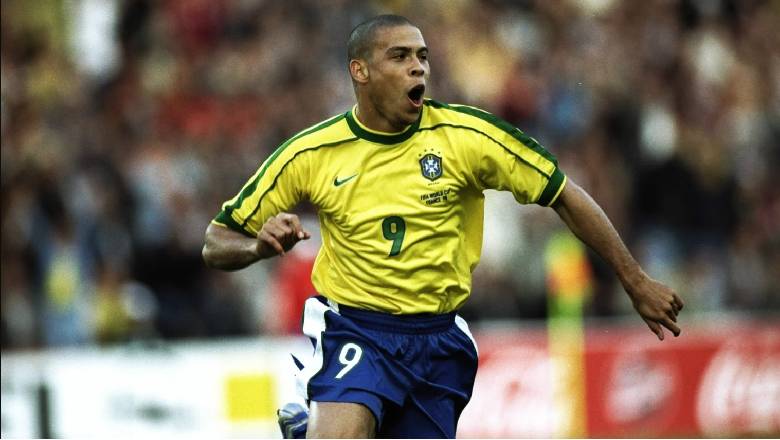
Although he was part of Brazil’s squad for the 1994 World Cup in the United States, the 17-year-old did not feature, with Romário and Bebeto leading the attack as Brazil lifted their fourth title. Ronaldo’s true impact on the global stage came later. His finest hour arrived in 2002, when he scored eight goals and played a decisive role in securing Brazil’s fifth World Cup crown. That triumph was made even more remarkable by his return from serious knee injuries, a comeback widely regarded as one of football’s most memorable redemption stories.
By the time the 2006 World Cup in Germany came around, persistent injuries and fitness concerns had begun to take their toll. Even so, Ronaldo added three more goals to his tally before Brazil were eliminated by the host nation in the quarter-finals.
He brought his professional career to a close on February 14, 2011, retiring while playing for Corinthians, leaving behind a legacy as one of the greatest forwards the sport has produced.
Lionel Messi currently ranks among the top four scorers in World Cup history with 13 goals, matching the tally of France striker Just Fontaine. Fontaine’s remarkable haul came in a single tournament in 1958, a record for most goals in one edition that still stands today.
Messi’s place in the conversation was cemented at the 2022 World Cup in Qatar. He arrived at the tournament with six goals from 19 previous appearances, but elevated his legacy over the course of a defining campaign. The Argentina captain scored in every knockout round match, becoming the first player in World Cup history to achieve that feat. His brace in the final against France proved decisive as Argentina lifted the trophy after a dramatic contest.
With the next World Cup set to take place in North America, the tournament could represent Messi’s final appearance on football’s biggest stage. Should he feature, he would have a genuine opportunity to challenge Miroslav Klose’s all-time scoring record.
Top 5 highest goal scorers in World Cup
Miroslav Klose - Germany - 16 goals
Ronaldo - Brazil - 15 goals
Gerd Müller - Germany - 14 goals
Just Fontaine - France - 13 goals
Lionel Messi - Argentina - 13 goals
Pelé – Brazil - 12 goals
Kylian Mbappé - France - 12 goals
Nowgoalmobi.net has named the highest goal scorers in World Cup history, unveiling a top 5 ranking that highlights one of football’s least enviable records.
Stay ahead of the game with updated football results, accurate odds, and daily predictions on our platform.
The Most Popular
-
 When does the English Premier League start? Top 5 most decorated clubs of the league
 -
 Belgium football kit history: Ranking the greatest kits ever
 -
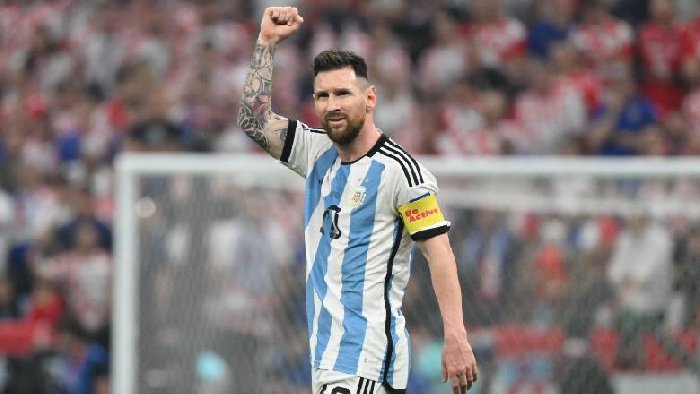 Who is the captain of the Argentina football team in 2022? The year Argentina conquered the world
 -
 Top 5 players fastest to 100 Premier League goals: Erling Haaland etches his name into history
 -
 How are FIFA player ratings calculated? Breaking down the secret behind the numbers on the card
 -
 All Neymar’s jersey numbers: Featuring both 7 and 10
 -
 Japan national football team players at World Cup 2026: 11 stars who can take the Blue Samurai deep
 -
 Why did Edinson Cavani leave PSG? Uncovering the real story behind the Uruguayan striker’s exit
 -
 How much did Bayern pay for Mane? Top 5 Bayern Munich’s record signings
 -
 How much did Tottenham pay for Richarlison? Top record signings of Tottenham