
Why do football transfers take so long?
The transfer market is where clubs reshape their squads and search for the right pieces to improve. After a demanding season, certain positions often need reinforcement, whether due to declining performance, injuries, or a lack of depth. Bringing in quality players from other teams is one of the most effective ways to strengthen a side.
However, completing a transfer is rarely straightforward. Before a deal becomes official, clubs must navigate a series of complex steps, from negotiations to contractual agreements. As a result, many moves take longer than expected.
In this article, Nowgoalmobi.net explains why football transfers take so long to complete.
Why do football transfers take so long?
One of the most complicated aspects of any transfer involves image rights. Leading players often carry lucrative personal sponsorship agreements, such as deals with major sportswear brands. When a buying club is tied to a rival sponsor, both sides must carefully negotiate how the player’s image can be used without breaching existing contracts, a process that can take considerable time.
At the same time, modern transfer agreements have become increasingly layered. Fees are rarely straightforward, with add-ons linked to appearances, goals, trophies, or even individual honours such as Ballon d’Or rankings. These clauses require detailed discussion before all parties are satisfied.
Timing also plays a strategic role. It is not uncommon for clubs to delay negotiations until the closing stages of the window, hoping to gain leverage as pressure builds. A selling club may be forced to lower its demands, while a buying side might push for better terms as the deadline approaches.
In many cases, deals are also interconnected. A club is often unwilling to part with a key player until a suitable replacement has been secured, creating a chain of transfers where progress depends on movement elsewhere in the market.
Even when an agreement is reached, the process is not complete. The medical examination is far more thorough than it may appear, particularly for high-value signings. Clubs conduct detailed assessments, including MRI scans, cardiac testing and biomechanical analysis to detect any underlying risks. Should any concerns arise, negotiations can reopen, with clubs seeking to revise the fee, which can delay the transfer further.
The 5 highest transfer fees in football history
5. Ousmane Dembélé - Borussia Dortmund to Barcelona (2017)
Ousmane Dembélé’s €135 million switch to FC Barcelona came in the immediate aftermath of Neymar’s record-breaking move to PSG, a context that inevitably heightened expectations. At Borussia Dortmund, under Thomas Tuchel, he had emerged as one of Europe’s most thrilling young talents, thriving in a system that suited his unpredictable style.
However, his spell at Camp Nou told a different story. Persistent hamstring injuries and recurring muscular problems disrupted his progress, leading to more than 100 missed matches. Although he collected three La Liga titles, his time in Spain is widely regarded as unfulfilled, largely due to inconsistency and the weight of his transfer fee.
4. Philippe Coutinho - Liverpool to Barcelona (2018)
Ranked fourth among the most expensive transfers, Philippe Coutinho joined FC Barcelona for a fee that rose to €135 million. From an analytical perspective, the move exposed a clear issue in player profiling, as his role did not fully align with the team’s tactical needs. Moreover, his high wages and amortised fee placed significant strain on the club’s finances, contributing to longer-term economic difficulties.
At Liverpool F.C., however, Coutinho had been the side’s creative focal point. Under Brendan Rodgers and later Jürgen Klopp, he developed into one of the Premier League’s finest attacking midfielders, registering 54 goals and 45 assists in 201 appearances.
After spells with Aston Villa F.C. and a loan at Al-Duhail SC, he eventually returned to his boyhood side, CR Vasco da Gama, marking a full-circle moment in his career.
3. Alexander Isak - Newcastle United to Liverpool (2025)
On the final day of the summer 2025 window, Liverpool F.C. broke the British transfer record to sign Alexander Isak for a fixed €145 million fee. The deal, however, was far from straightforward. Following a career-best 2024/25 campaign, Isak grew frustrated with Newcastle United F.C., believing the club had not delivered on key sporting promises. As tensions escalated, he refused to train and was left out of the opening three league fixtures.
Newcastle eventually agreed to the sale only after securing Nick Woltemade as a replacement. For Liverpool, the move underlined clear ambition, effectively bringing together the two leading scorers from the previous Premier League season.
2. Kylian Mbappé - Monaco to Paris Saint-Germain (2018)
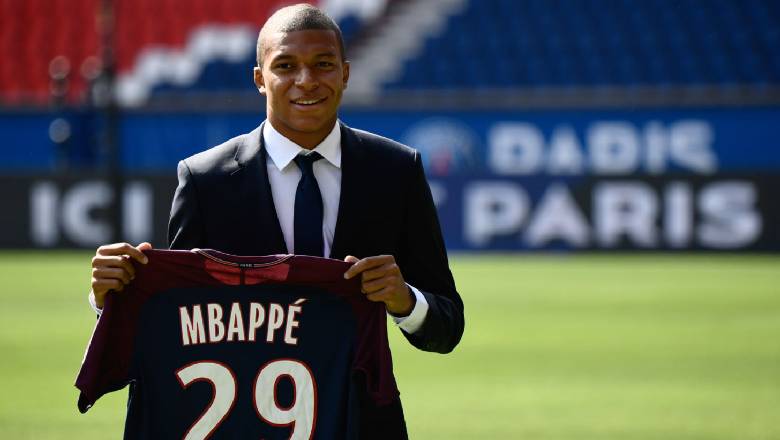
The move of Kylian Mbappé from AS Monaco FC to Paris Saint-Germain F.C. is often viewed as a defining moment in French football’s push for global prominence. Initially arriving on a one-year loan, the deal included a mandatory €180 million purchase clause, activated in 2018.
Over seven seasons at the Parc des Princes, Mbappé rewrote the club’s record books and eventually became PSG’s all-time leading goalscorer with 256 goals. However, despite sharing the pitch with Lionel Messi and Neymar, sustained success in the Champions League remained out of reach, leaving a notable gap in an otherwise remarkable spell.
1. Neymar - Barcelona to Paris Saint-Germain (2017)
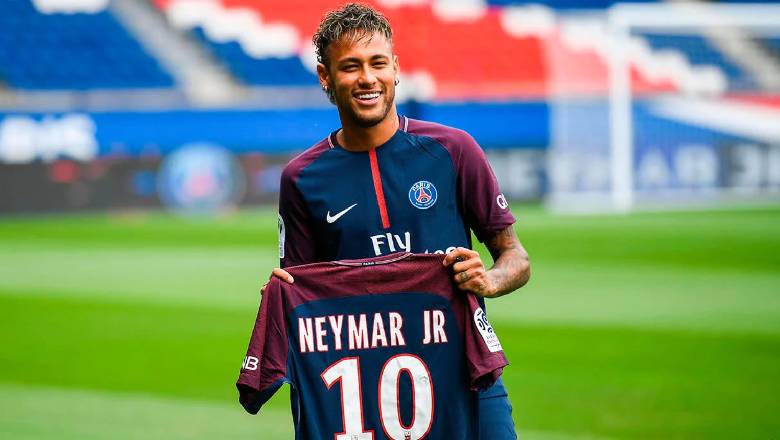
Neymar’s move from FC Barcelona to Paris Saint-Germain F.C. in August 2017 remains a watershed moment in the modern transfer market. PSG activated his €222 million release clause, a figure once seen as a deterrent rather than a realistic fee, as the Brazilian sought to step out of Lionel Messi’s shadow and pursue the Ballon d’Or.
During six seasons in Paris, he delivered 118 goals and 77 assists in 173 appearances, averaging more than one goal contribution per game. He also played a central role in PSG reaching their first Champions League final in 2020, where they were narrowly beaten by FC Bayern Munich, marking the peak of his time in France.
The 5 highest transfer fees in football history
5. Ousmane Dembélé - Borussia Dortmund to Barcelona (2017)
4. Philippe Coutinho - Liverpool to Barcelona (2018)
3. Alexander Isak - Newcastle United to Liverpool (2025)
2. Kylian Mbappé - Monaco to Paris Saint-Germain (2018)
1. Neymar - Barcelona to Paris Saint-Germain (2017)
Nowgoalmobi has answered the question: “Why do football transfers take so long?”
Stay ahead of the game with updated football results, accurate odds, and daily predictions on our platform.
The Most Popular
-
 When does the English Premier League start? Top 5 most decorated clubs of the league
 -
 Belgium football kit history: Ranking the greatest kits ever
 -
 Who is the captain of the Argentina football team in 2022? The year Argentina conquered the world
 -
 Top 5 players fastest to 100 Premier League goals: Erling Haaland etches his name into history
 -
 How are FIFA player ratings calculated? Breaking down the secret behind the numbers on the card
 -
 All Neymar’s jersey numbers: Featuring both 7 and 10
 -
 Japan national football team players at World Cup 2026: 11 stars who can take the Blue Samurai deep
 -
 Why did Edinson Cavani leave PSG? Uncovering the real story behind the Uruguayan striker’s exit
 -
 How much did Bayern pay for Mane? Top 5 Bayern Munich’s record signings
 -
 How much did Tottenham pay for Richarlison? Top record signings of Tottenham